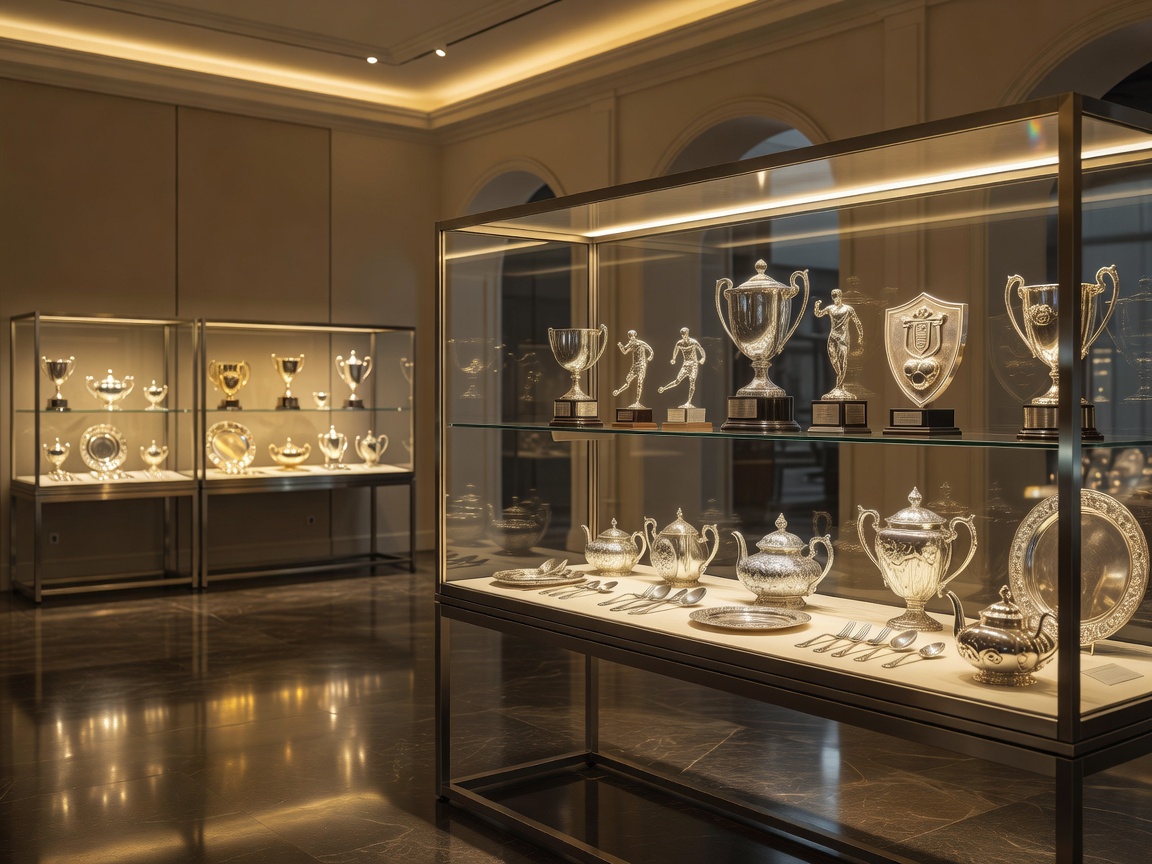
The European Cup Sanctuary: "Reyes de Europa"
The centerpiece of the museum visit is undoubtedly the European Cup and UEFA Champions League showcase. Entering this darkened, resonant chamber is an evocative experience: a soundscape of the UEFA anthem reverberates softly as dozens of authentic trophies gleam within reinforced panoramic glass cabinets.
Real Madrid holds an unmatched historical record in the tournament, having clinched the first five consecutive titles between 1956 and 1960 under the leadership of Alfredo Di Stéfano, Ferenc Puskás, and Paco Gento. The room provides an illuminating visual timeline: from the slender, original European Champion Clubs' Cup design to the modern handles lifted during the contemporary eras of Zinedine Zidane and Carlo Ancelotti.
Interactive Multimedia & Tactile Archives
Unlike conventional sports trophy cases that offer only static plaques, the redesigned Bernabéu museum incorporates extensive sensory displays:
- The "Sensations" Wave Wall: A multi-touch audiovisual wall over 60 meters long that enables visitors to pinch, zoom, and review goals, legendary tactical formations, and historical match stats from 1902 to the present.
- Sound Booths and Choral Chants: Acoustic pods simulating the roar of 80,000 supporters during historic comeback nights, known locally as remontadas.
- Tactile Silverware Displays: Accessible tactile replicas enabling visually impaired and sensory visitors to appreciate the contours of historic domestic league trophies and European hardware.
Individual Accolades: From Di Stéfano to Modern Ballon d'Or Laureates
The museum dedicates significant gallery space to individual player distinctions. Madrid has served as the home for numerous Ballon d'Or, FIFA The Best, and European Golden Shoe winners. Visitors can inspect individual display niches honoring legends such as Raymond Kopa, Di Stéfano, Ronaldo Nazário, Fabio Cannavaro, Kaká, Cristiano Ronaldo, and Luka Modrić.
Beyond silverware, the archival collection features leather footballs from the 1920s with thick external stitching, vintage woolen jerseys bearing embroidered royal crests, and signed boots from pivotal European finals.
Museum Visit Strategy: Timing & Pacing
| Time of Day | Crowd Density | Photography Quality | Recommendation |
|---|---|---|---|
| 09:30 – 11:00 | Low | Clean glass views without glare or crowds | Optimal slot for detailed study and photography |
| 12:00 – 15:00 | High to Peak | Moderate reflection from lighting and tour groups | Expect queues near the European Cup cases |
| 17:00 – Closing | Medium | Warm indoor lighting, manageable flow | Good alternative for non-matchday afternoons |
Educational Context and The Club's Civic Identity
Understanding Real Madrid requires examining its civic relationship with the capital. Established in 1902 as Madrid Foot-ball Club, it received the royal "Real" prefix from King Alfonso XIII in 1920. The museum contextualizes the club through Madrid's rapid 20th-century modernization, the reconstruction of the Castellana boulevard following the Spanish Civil War, and the development of Spain’s international sporting footprint.
Plan to spend at least 45 to 60 minutes inside the museum halls alone, separate from the outdoor pitch seating and changing room portions of the broader stadium circuit.